Column
After Mole Removal: When Should YouChange or Remove the Protective Dressing?
In brief
- White Puffiness
- This can occur as the tape absorbs wound fluid; infection is not determined by color alone.
- When to Change
- Check lifting, leakage, wound condition, and product instructions together.
- Returning to Daily Life
- Cleansing, makeup, and sun protection depend on whether the wound has closed.
Explore this article
"My protective dressing turned white and puffy after mole removal. Do I need to change it every day?"
A dressing that turns slightly white and puffy does not automatically need changing. That appearance can happen as hydrocolloid dressing absorbs wound fluid. What matters more when deciding to change is whether the edges are lifting or leaking, and whether pain or redness is increasing. Use the change instructions from the product and your clinic as your guide.
What should you check before having a mole removed?
Start by confirming what kind of lesion it actually is — not just that it "looks like a mole." Small brown spots can be quite different from one another. That is why an examination should come before booking a removal date. The diagnosis shapes both the removal method and the aftercare that follows.
Please share the history of any lesion that has changed in size, color, or shape, that bleeds, or that has regrown after a previous removal. Depending on the examination findings, a different removal method or a biopsy may be needed instead of laser. This is something to confirm before setting a schedule purely for cosmetic removal.
The American Academy of Dermatology describes excision and shave removal, among other approaches, depending on the lesion for the evaluation and removal of moles. This does not mean every mole must be treated with a laser. You should also avoid removing moles at home with acidic products or tools.
Aftercare guidance varies depending on which removal method was used. Do not apply the same tape schedule to a sutured wound, a surface-treated wound, or wounds of different depths or sizes.
How the lesion was removed determines how the wound should be cared for. Do not apply the same dressing schedule to a laser-treated wound and a sutured wound.
What does protective dressing do?
The tape's job is to protect the wound and maintain a recovery environment that does not dry out too quickly. Forming a scab fast is not the goal of aftercare. That said, the name "healing dressing" does not mean the tape fully prevents scarring.
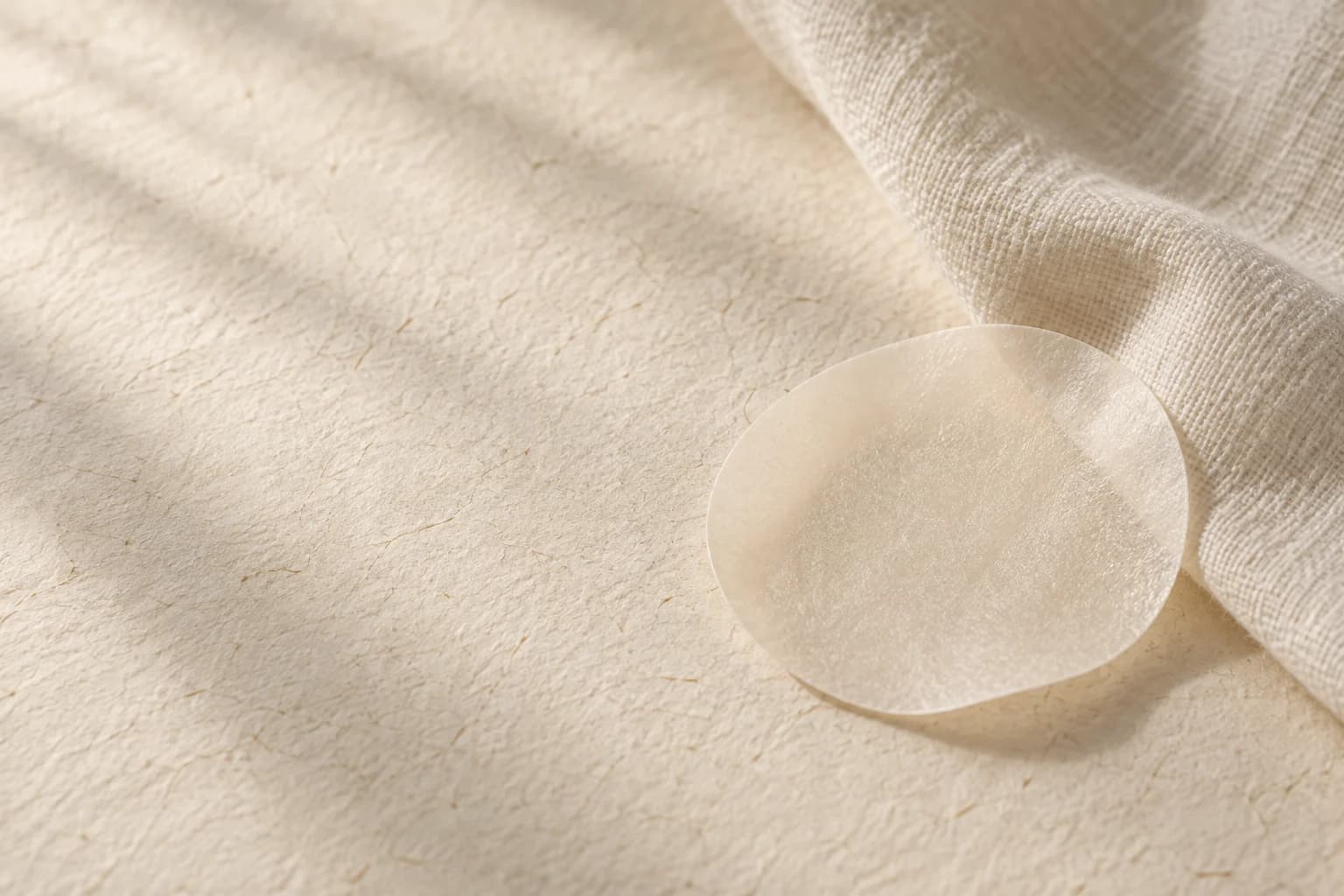
Commonly used hydrocolloid dressings turn into a gel form as they absorb fluid from the wound. Convatec's DuoDERM instructions also explain this principle. Not every transparent bandage has the same material or absorption capacity, so check the name and usage instructions for the product you received.
Depending on the wound, a different dressing or ointment management may be more appropriate. Rather than buying the same product someone else used on their wound, it is better to follow the method chosen by the clinic where you had the procedure.
What you need to prepare at home is not complicated. Confirm the actual dressing being used, how to change it, cleansing instructions, and the clinic's contact information. Understanding the prescribed care method accurately comes before adding multiple new regenerative creams or antiseptics.
The tape's role is protection and maintaining a moist environment. Following your aftercare instructions precisely comes before adding more — and more expensive — regenerative products on top.
If it turns white and puffy, should you change it right away?
A white center alone is not a reason to change the tape right away. That appearance can simply be absorbed wound fluid turning into gel. Check both how well the tape is adhering and how the wound itself is doing, using the signs below.
| Current Appearance | What to Check | How to Respond |
|---|---|---|
| White puffiness only in the center | Whether it is still adhered without leakage or lifting | Don't remove the tape based on color aloneIf it is well adhered and not leaking, follow the product and clinic instructions |
| Edges lifting or leaking | Whether protection is maintained | Change as instructedIf leaking frequently, contact the clinic about your dressing method |
| Increasing redness or pain | Whether warmth, discharge, or swelling is also present | Contact the clinicDo not keep applying new tape while symptoms are getting worse |
| Itching at the adhesive area | Whether irritation follows the outline of the tape | Check for adhesive irritation tooIf itching persists, ask whether a different management approach is needed |
The table is for reference when deciding whether to get in touch and how to manage the wound. Infection or contact dermatitis cannot be confirmed by photos and color alone.
A product label stating "up to X days" does not mean you must keep it on for that entire period. For example, even if the manufacturer provides a maximum usage period for a specific dressing, earlier review is needed if there is leakage or discomfort.
Conversely, avoid peeling the tape off and examining the wound every time it turns slightly white. Rather than the number of changes itself, what matters is protecting the wound while minimizing unnecessary irritation. If wound fluid is heavy and the tape leaks frequently, let the clinic know rather than layering tape on top of tape.
Look at lifting, leakage, and worsening symptoms together — not just the white color. You cannot tell a tape that is absorbing well from a wound that needs medical attention by color alone.
Can you apply ointment and then put the tape on top?
Do not apply extra ointment on your own and then cover it, unless you have been specifically told to do so. Depending on the dressing, this can affect adhesion and absorption. If you have been prescribed an ointment, follow the exact instructions you received — including whether it is used with the tape and where it should be applied.
The management approach may differ depending on how the tape adheres and absorbs, and the condition of the wound. Do not apply an ointment on your own thinking "adding an antibiotic ointment will be safer." The American Academy of Dermatology's wound care guidance explains that antibiotic ointment does not need to be used routinely on simple wounds and that allergic reactions can occur.
If you already have a prescribed ointment, confirm why it was prescribed, where to apply it, and whether it is used together with the tape. It is also not appropriate to stop a prescription based on general information alone.
Do not assume that using more antiseptic means healing faster. Follow the cleansing and moisturizing instructions you received after the procedure, and when changing a product, it is better to pass along the name and ingredients to confirm it is acceptable.
Tape and ointment are not a combination where more is better. Use prescribed products as directed, and check before adding anything new.
When can you start cleansing and wearing makeup?
Being able to cleanse does not mean makeup or swimming is also safe. It depends on whether the wound is still open, whether there is still fluid present, and whether the surface has closed. Do not assume that because tape is in place, the wound underneath has already fully healed.
| Status | Focus of Care | Timeline to Confirm |
|---|---|---|
| Wound still open or fluid still present | Cleansing and protection as instructed | Avoid direct irritation to the woundFollow cleansing and protection instructions, and be careful about cosmetic contact |
| Surface in the process of closing | Confirm when dressing use ends | Let wound condition decide when to remove the tapeDo not stop protection just because a certain number of days have passed |
| After the wound has closed | Managing sun exposure and friction | Protect from sun and frictionStart moisturizing and sun protection suited to the recovering skin |
If the clinic has allowed cleansing, follow instructions such as washing gently around the area and not rubbing. Even a dressing labeled waterproof changes in condition if it lifts or fluid leaks through it. Do not extend the meaning of being told cleansing is fine to include swimming or prolonged water immersion.
For makeup, first confirm whether the skin has recovered, rather than just covering over the wound. If you have an important event, discuss in advance how long the tape may be visible and when makeup can be resumed. Removing several small moles at once means there are that many more areas to manage.
Find out the separate restart point for cleansing, makeup, and swimming. Using a waterproof dressing does not mean prolonged soaking in water is safe.
Once the tape is off, can you apply sunscreen right away?
The standard is whether the wound has closed — not whether the tape has been removed. Even after taking the tape off, if there is still fluid or an open area, do not apply regular sunscreen directly — check your aftercare instructions first. When going outside, you will also need a way to protect the wound from sun exposure without irritating it.
The American Academy of Dermatology explains that sun protection after the wound has healed helps manage red or brown marks. A broad-spectrum sunscreen of SPF 30 or higher along with shade and hats can be used. Even during periods when it is difficult to apply products directly to a healing wound, consult about ways to physically reduce sun exposure.
Do not assume that the protective dressing itself provides adequate sun protection. Especially for transparent or thin products, it is difficult to estimate their protective function from labeling alone. If you will be outside for a long time, plan your wound care and light-exposure precautions separately.
Also avoid starting brightening agents or exfoliants early in an attempt to fade marks quickly. Even after the wound has closed, if the skin remains sensitive, confirm when existing products can be resumed.
Sun protection continues even after the tape comes off. Once the wound has closed, keep up with sun protection and moisturizing suited to recovering skin.
If brown color reappears, does that mean the mole came back?
Brown color reappearing does not always mean the mole has come back. It may be residual pigmentation during recovery, or the original lesion may have remained or become visible again. Rather than going straight to a repeat procedure to address the color, review your before photos and the removal method first.
The appearance of the original lesion, the removal method used, and progress photos all help with assessment. If you were advised from the start that multiple evaluations might be needed, find out why and when the next check should be. If the wound is still healing and you irritate it again trying to remove the remaining color, management can become more difficult.
Do not simply think of a site that keeps recurring or changing shape as "the mole I always have removed." The American Academy of Dermatology also advises having a clinician evaluate lesions that regrow after removal. The original diagnosis can be reviewed again if necessary.
What changes should prompt you to contact the clinic right away?
Let the clinic know if pain that was decreasing starts to worsen again, if redness, warmth, or swelling spreads, or if bleeding or discharge continues. Fever or changes in your general condition require prompt medical attention.
When you contact the clinic, also share: "how many days since the procedure, when the change started, and the name of the dressing and ointment you are using." Photos taken in consistent lighting are also helpful. Rather than a close-up of the color alone, a photo that includes the surrounding skin is more useful for describing the condition.
Do not frequently open the wound to check it or try to find the cause by picking at remaining scabs. Even if the area is small, evaluation is needed if symptoms are worsening.
How were the wound care references applied?
General principles of moist wound care and how dressings work were used as references. Recovery timelines from skin biopsy wound care guidance were not transferred as fixed schedules for laser mole removal. The removal method you received and the dressing instructions you were given take priority.
- American Academy of Dermatology — Mole Diagnosis and Treatment: Lesion evaluation and confirming recurrence after removal.
- Convatec DuoDERM Dressing Information: Fluid absorption and gel formation, and conditions for usage duration.
- American Academy of Dermatology — Post Skin Biopsy Wound Care: Cleansing, protection, and symptoms to report to a clinician. This is kept separate from per-laser schedules.
- American Academy of Dermatology — Wound Care to Minimize Scarring: Wound protection and sun protection after recovery.
Frequently Asked Questions
Q. Does white puffiness always mean pus?
No. Hydrocolloid can turn into a gel as it absorbs wound fluid. However, if pain, warmth, or redness worsens, do not judge the situation as normal based on color alone — seek medical evaluation.
Q. Do you always have to keep the same tape on for 7 days?
No. A product's maximum usage period and the actual time to change it are different. Follow the instructions you received, adjusted for leakage, lifting, discomfort, and wound condition.
Q. If the tape falls off, is it fine to just let the wound air-dry?
You need to check whether the wound still needs protection. Follow the change method you were instructed on, and if you are unsure, contact the clinic. Do not leave it exposed intentionally to build up a thick scab.
Q. Do you have to apply antibiotic ointment?
It is not uniformly necessary for every wound. If it was prescribed, use it as instructed. If you want to add a product that was not prescribed, first confirm whether it can be used together with your dressing.
Q. Is sunlight fine as long as you have the tape on?
Do not assume the dressing substitutes for adequate sun protection. Plan protection appropriate to the wound's condition, along with sunscreen use after recovery.
Q. If a red mark remains, does that mean scarring is certain?
Color changes during recovery and the final scar cannot be considered the same thing right away. Monitor progress by distinguishing surface indentations or raised areas from color changes, and seek evaluation if things worsen.
Q. If the mole appears again, can I just have it removed again right away?
You first need to determine whether it is a recurrence or a mark from healing. A recurring lesion may warrant re-examining the diagnosis, so have it assessed alongside the state of healing.
Related Guides
See the Mole & Lesion Removal Guide to explore the range of available treatments. If widespread brown marks are a concern, you may also want to read Differences Between Melasma, Sunspots, and Post-Inflammatory Pigmentation.
This article provides general wound care information and does not replace individualized dressing instructions. Please prioritize the aftercare guidance and follow-up visits advised by the clinic that performed your procedure.