
Radiofrequency lifting
Radiofrequency Lifting
Before Treatment, Did You Have These Concerns?
“If I choose a well-known device, will it suit my skin too?”
Even with the same radiofrequency device, the tip, handpiece, and treatment area differ. Start by distinguishing between others’ reviews and your own skin conditions.
Select Device
Review the treatment configuration by device.
By checking the tip, mode, and treatment range, it becomes easier to compare prices and treatment descriptions.
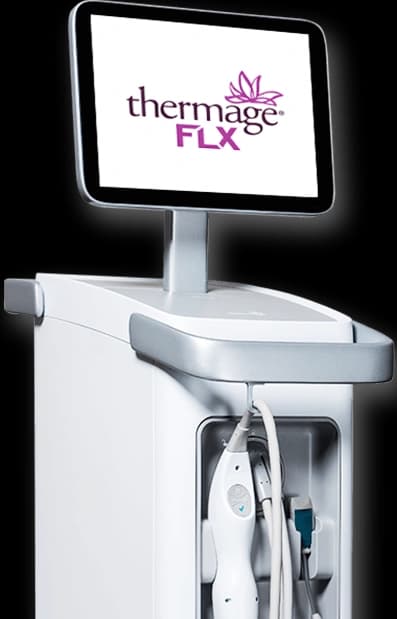
Thermage FLX
The relationship between tips and areas
Thermage FLX is a device that uses monopolar radiofrequency to create a thermal response in the skin tissue. It has a structure that uses cooling and vibration together, and the range is determined by assessing what changes are needed for wrinkles and skin laxity.
View Thermage FLX DetailsThe scope of the procedure and suitability are determined after consultation.
Understanding the Treatment
Radiofrequency is a treatment that delivers heat to the skin.
Radiofrequency lifting uses electrical energy to create a thermal response in the tissue. Because each device differs in energy delivery structure and in whether it uses tips, cooling, or suction, it is difficult to compare only the number of shots under the same label of radiofrequency.
We assess suitability when the skin looks thin, or when fine wrinkles and laxity are both noticeable. If the main causes are fat thickness, hollowing, or muscle-related wrinkles, we separately consider treatments with different roles.
DA’s Treatment Plan
We look at skin condition and the volume to be preserved together.
DA considers the settings suited to the area and the response during treatment as the basis of the plan, rather than the strength of radiofrequency itself.
See the Actual ProcessLocation of elasticity and hollowing together
We check the skin condition of the cheeks, jawline, and eye area, as well as any unwanted volume changes. Even within the same face, the needed approach differs by area.
Explanation of tips and handpieces
We explain differences that affect the actual setup, such as facial and eye-area tips, monopolar and bipolar modes, and whether suction is used.
Reflecting warmth and skin response
We do not explain that tolerating pain is a better treatment. We proceed by checking contact, cooling, skin response, and discomfort together.
Understanding the Components
Please review the setup of each radiofrequency device.
When units, areas, and tips are matched together, price differences are easier to understand.
Thermage FLX
We distinguish between facial 300·600 shots and Eye Thermage 225·450 shots. The tip, area, and protective preparation differ for the face and the eye area.
XERF
A radiofrequency device with depth and intensity settings, and a cooling structure. Check the area-specific distribution of 100·300·600 shots.
Density Classic·Alpha
Two setups with separate pricing. Compare each 300·600 shots while checking the actual tip, mode, and included scope.
InMode
The purpose, bruising, and swelling differ depending on the handpiece and whether suction is used. Check the boundaries between one-area, time-based, and full-face treatments.
Volnewmer
A monopolar radiofrequency device that uses cooling. The 300·600 shot setup is determined according to the actual tip and treatment area.
From Your Visit to Follow-up Checks
This is how the treatment progresses.
Preparation and recovery vary depending on the selected area and method. Please also let us know about any important schedules and your previous treatment experience.
Check the skin and medical history
We look at laxity, hollowing, and sensitive areas, and check for implanted electronic devices or metal implants, as well as any prior procedures.
Determine the device, tip, and treatment range
We explain the needed role, handpiece, treatment amount, pain, recovery, and total cost.
Preparation for treatment
We clean the skin and prepare protection and contact suitable for the device. If needed, methods to reduce pain are also applied.
Check radiofrequency and skin response
The treatment is carried out according to the area-specific plan, while heat, pain, skin contact, and cooling are checked together.
Completion and follow-up plan
We explain how to manage it by observing the immediate response and the criteria for checking progress.
What to Know Before and After Treatment
Please manage your skin like this after the procedure.
- Warmth and swelling
- Depending on the device and settings, temporary redness, swelling, tenderness, and bruising may occur.
- Changes that need observation
- Please let the clinic know if burns, blisters, severe pain, or changes in skin shape are suspected.
- Additional treatment
- After recovery and the actual changes are confirmed, we decide whether to repeat treatment in the same area or combine it with other procedures.
Pricing Information
Once You Know the Components,
It’s easier to understand the price, too.
This is the cost according to the product, area, and quantity. Please check what is included in the selected composition.
View Full Treatment Price0item(s)
No event price is listed. Please check the opening offers or ask during consultation.
All prices exclude VAT. For items with separate costs such as tips or consultation fees, please check any additional charges.
FAQ
Questions to Ask Before Deciding.
Are all radiofrequency treatments the same?
The structure for delivering energy and the handpiece used are different. Please check the actual treatment configuration along with the device name.
Should I get it together with ultrasound?
It can be considered together, but it is not a necessary combination for everyone. Please check what concerns each procedure addresses and why an additional cost is needed.
I’m worried about warmth or pain.
It may feel different depending on the individual and the area. Please discuss possible methods such as cooling or anesthesia, along with any additional preparation time and cost, before the procedure.
If the skin is thin, is radiofrequency right?
It cannot be determined based on thinness alone. We assess the skin condition together with volume, implants, and prior reactions.
Does more pain mean better results?
Pain is not a measure of effectiveness. Discomfort is information needed to check the settings and contact during treatment.
Results and recovery vary by individual, and all procedures carry a risk of side effects.
DA · Radiofrequency Lifting Consultation
Even if You Haven’t Decided on a Treatment
That’s okay.
Please select your preferred date and time and enter your booking information. The treatments you have saved will also be included in your booking request.